EET 100 • UNIT 5 • Business & Economics
Market structures
Topics covered: Perfect/pure competition, Monopoly, Monopolistic competition, Oligopoly
Syllabus Study Notes (Core Overview)
Free Overview Preview1. Core Concept Overview & Intuition
Market structure refers to the organisational and competitive characteristics of a market that determine how firms behave, how prices are set, and how resources are allocated. The four canonical structures — perfect competition, monopoly, monopolistic competition, and oligopoly — are distinguished by four structural criteria: the number of sellers, the degree of product differentiation, the conditions of entry and exit, and the extent of control over price. These criteria jointly determine the shape of the demand curve facing an individual firm, which in turn governs the firm's profit-maximising output and price.
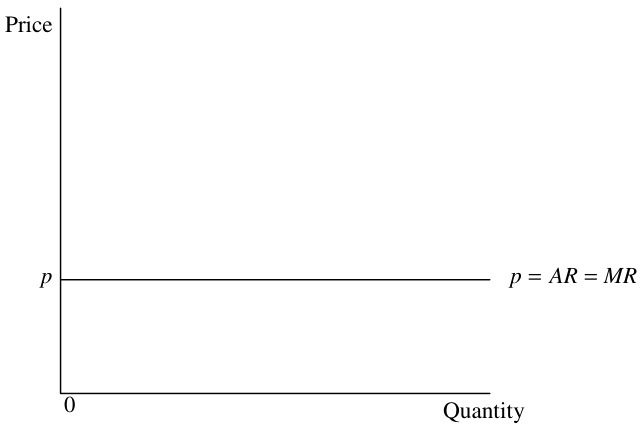
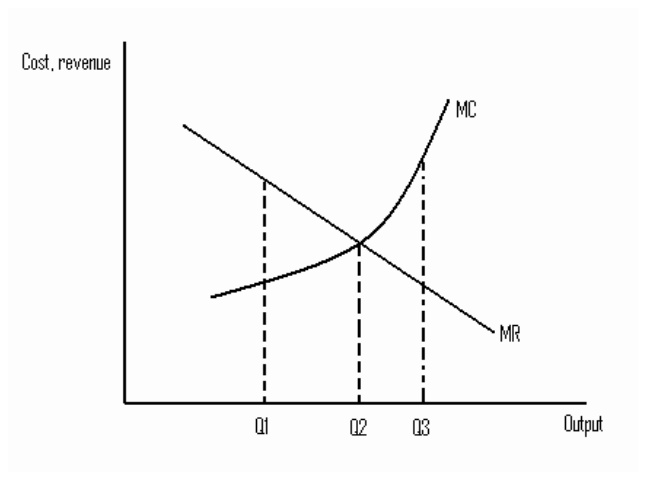
The central analytical thread running through all four structures is the profit-maximisation condition. Every firm, regardless of market structure, maximises profit by producing the output level at which marginal revenue equals marginal cost. What differs across structures is the relationship between price and marginal revenue. Under perfect competition, the firm is a price taker, so price equals marginal revenue. Under monopoly, monopolistic competition, and oligopoly, the firm faces a downward-sloping demand curve, so price exceeds marginal revenue. This single distinction generates the entire taxonomy of market outcomes.
The intuition behind the spectrum from perfect competition to monopoly is straightforward. As the number of sellers falls and products become more differentiated, each firm gains increasing control over its price. Greater price control implies a larger gap between price and marginal cost, which in turn implies a larger deadweight loss relative to the perfectly competitive benchmark. The perfectly competitive market is therefore the efficiency benchmark against which all other structures are evaluated.
A critical temporal distinction applies to all structures: short-run versus long-run equilibrium. In the short run, fixed factors of production prevent entry or exit, so firms can earn supernormal profits or incur losses. In the long run, entry and exit drive profits toward zero in competitive and monopolistically competitive markets, but barriers to entry allow monopolists and colluding oligopolists to sustain supernormal profits indefinitely.
2. Mathematical Formalization & Core Definitions
> Definition (Market Structure). A market structure is the set of characteristics — number of buyers and sellers, nature of the product, conditions of entry and exit, and degree of price control — that determines the competitive environment in which firms operate.
> Definition (Perfect/Pure Competition). A market structure characterised by a large number of small buyers and sellers, a homogeneous product, free entry and exit, perfect information, and perfect factor mobility. Each firm is a price taker and faces a perfectly elastic demand curve.
> Definition (Monopoly). A market structure in which a single seller supplies a product for which there are no close substitutes, and barriers to entry prevent the entry of potential competitors.
> Definition (Monopolistic Competition). A market structure with many sellers, differentiated but highly substitutable products, free entry and exit, and profit maximisation as the firm's goal in both the short run and the long run.
> Definition (Oligopoly). A market structure with few sellers, where products may be identical (pure or perfect oligopoly) or differentiated (differentiated oligopoly), and where each firm's decisions are interdependent with those of its rivals.
The profit-maximisation condition common to all structures is:
$$
\max_{Q} \pi(Q) = TR(Q) - TC(Q)
$$
where $\pi$ denotes profit, $TR$ denotes total revenue, $TC$ denotes total cost, and $Q$ denotes output. The first-order condition yields:
$$
\frac{d\pi}{dQ} = MR - MC = 0 \implies MR = MC
$$
where $MR$ denotes marginal revenue and $MC$ denotes marginal cost. The second-order condition requires that $MC$ cuts $MR$ from below.
Under perfect competition, the firm is a price taker, so:
$$
P = MR = AR
$$
where $P$ denotes price and $AR$ denotes average revenue. The firm's demand curve is horizontal at the market-determined price.
Under monopoly, monopolistic competition, and oligopoly, the firm faces a downward-sloping demand curve, so:
P > MR
and the firm has market power, measured by the Lerner index:
$$
L = \frac{P - MC}{P}
$$
where $L$ denotes the Lerner index of market power. Under perfect competition, $P = MC$, so $L = 0$. Under monopoly, $L > 0$.
The relationship between marginal revenue and the price elasticity of demand $\varepsilon_d$ is:
$$
MR = P\left(1 - \frac{1}{\lvert \varepsilon_d \rvert}\right)
$$
where $\lvert \varepsilon_d \rvert$ denotes the absolute value of the price elasticity of demand. This relationship holds for any firm facing a downward-sloping demand curve.
Unlock Complete Study Notes & Exam Traps
The full guide includes formal proofs, worked exemplar calculations, high-yield exam traps, and examiner marking schemes. Continue studying this topic in Mentify Prep Studio.
Verified Examination Problems
11 verified questions in catalogQuestion 1 (20 marks)
A perfectly competitive firm operates in a market where the prevailing price is determined by industry demand and supply. The firm faces the following short-run cost structure:
$$
TC = 200 + 10Q + 2Q^2
$$
where $TC$ is total cost in shillings and $Q$ is output in units.
(i) Derive the firm's marginal cost ($MC$) and average variable cost ($AVC$) functions. (4 Marks)
(ii) If the market price is $P = 50$, calculate the profit-maximising output and the firm's short-run profit or loss. (6 Marks)
(iii) Determine the shutdown price below which the firm should cease production in the short run. (4 Marks)
(iv) Explain what will happen to this market in the long run if all firms have identical cost structures and the current price yields supernormal profits. (6 Marks)
Question 2 (20 marks)
A monopolist faces the market demand curve:
$$
P = 120 - 2Q
$$
and has a total cost function:
$$
TC = 20Q + 100
$$
(i) Determine the monopolist's marginal revenue ($MR$) and marginal cost ($MC$) functions. (4 Marks)
(ii) Calculate the profit-maximising price and output for the monopolist. (6 Marks)
(iii) Compute the monopolist's total profit at the equilibrium. (4 Marks)
(iv) Compare the monopoly outcome with what would prevail if the same market were perfectly competitive (where $P = MC$). Calculate the deadweight loss and explain its economic meaning. (6 Marks)
Access all authentic past questions, interactive AI hint generation, and full marking rubrics in the course studio.
Unlock All Questions in Studio →